Case Studies

By Tom Hootman, AIA; David Okada, P.E., Member ASHRAE; Shanti Pless, Member ASHRAE; Michael Sheppy, Associate Member ASHRAE; and Paul Torcellini, Ph.D., P.E.,Member ASHRAE

About the Authors

Tom Hootman, AIA, LEED AP BD+C, is director of sustainability at RNL in Denver. David Okada, P.E., Member ASHRAE, LEED AP, is an associate principal for Integral Group in Seattle. He worked on the NREL RSF project while at Stantec Consulting. Shanti Pless, Member ASHRAE, is a senior energy efficiency research engineer in the NREL Commercial Buildings Research Group in Golden, Colo., Michael Sheppy, Associate Member ASHRAE, is a research engineer in the NREL Commercial Buildings Research Group in Golden, Colo. Paul Torcellini, Ph.D., P.E., Member ASHRAE, is the line manager of the NREL Commercial Buildings Research Group in Golden, Colo.

This article presents the process used for delivering the RSF as a replicable blueprint to achieve a large reduction in building energy use and to adopt a net zero energy approach for large-scale commercial buildings without increasing cost.

Net Zero Energy Procurement

The foundation to this blueprint is writing performance requirements into the contract. NREL developed a performance-based design-build approach to procurement. The goals of this approach are unleashing the creativity of the designers and builders, maximizing collaboration, and reducing overall risk by shifting responsibility and control to the design build team. (See Key Provisions Included.)

These provisions filtered into the design-build team’s contractual relationships and reinforced a performance-centered, integrated delivery process. The investment NREL made in clearly and thoroughly defining its objectives was critical to simultaneously meet the aggressive performance, cost and schedule requirements. (See Primary Project Objectives and Requirements.)

The design-build team realized that by focusing on net zero energy, many of the other objectives would fall into place. The project is pursuing three of NREL’s four definitions of net zero energy: site energy, source energy, and energy emissions (net zero energy cost was not pursued).  Meeting the net zero site energy requirements was the most challenging and served as the basis for sizing the renewable energy system.
 
With the final phase of the on-site photovoltaic system installed during summer 2012, the project is meeting its demand-side energy use targets, but is still a year away from having a full net zero energy year.


Climate Responsive Design

The most cost-effective way to save energy is to not need it. Building the architectural concept around climate responsive strategies reduces demand on active lighting and HVAC systems.

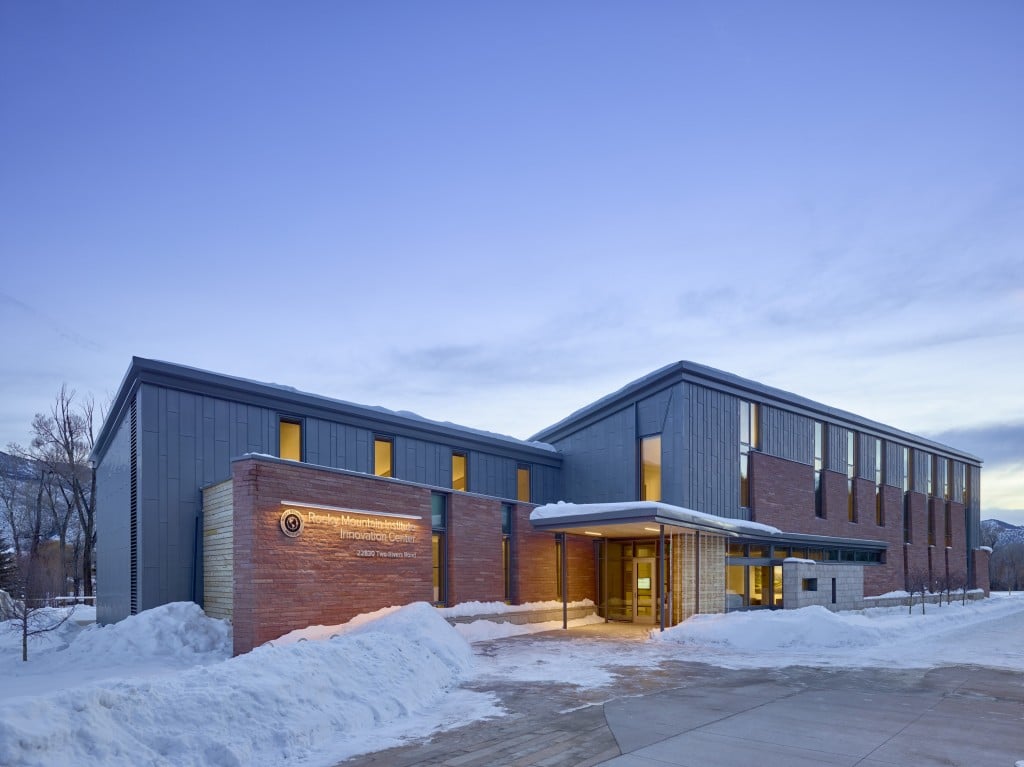
The primary building section design addresses strategies such as a 100% daylit footprint, effective cross ventilation and solar and glare control. The resulting section is 60 ft deep. The narrow depth and campus constraints led to the H-shaped plan that positions the office program in long, thin, east-west-oriented wings.

The building envelope also is key in integrating passive strategies. The façades have low average window-to-wall ratios of 27%, but the design still provides a fully daylit interior.

The two primary exterior wall assemblies include a precast concrete assembly and a steel stud assembly. The precast concrete walls include continuous rigid insulation and use a low-conductivity connector between the interior and exterior concrete layers.

The steel stud wall uses a stud with stamped openings within the web, which reduces the thermal bridging. In addition to high R-value wall and roof assemblies, careful attention was paid to the intersections of assemblies to reduce thermal bridging.


Commercial

Educational

Government

Healthcare

Industrial

Office/Institutional

Public Assembly

Residential

Building Energy Quotient